
6 Research and Evaluation Protocols as Learning Tools
Protocol Studio
Pamela Rothpletz-Puglia
PART II
Studying Biopsychosocial Drivers of Health through Qualitative Inquiry
CHAPTER 6
Research and Evaluation Protocols as Learning Tools
Part II OpenerChapters 1 through 5 traced the biological, psychological, and social drivers of health—the biopsychosocial model first articulated by Engel (1977) and introduced in this volume (Rothpletz-Puglia, 2026a)—and showed how they interact in the lives of real people. Part II turns from describing the biopsychosocial model to studying it. This chapter opens Part II by introducing the research and evaluation protocol: the structured plan that lets health professionals turn curiosity about context into rigorous, ethical, and shareable knowledge. Every qualitative and mixed methods chapter that follows (Chapters 7 through 10) will ask you to revisit and adapt the protocol you begin building here. |
Chapter Overview
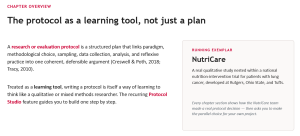
Contemporary health science and health professions education relies increasingly on research and evaluation protocols to guide rigorous inquiry, ensure ethical and regulatory compliance, and make complex studies implementable across settings (Creswell & Poth, 2018; Tracy, 2010). In qualitative and mixed methods research, a protocol does more than list procedures step by step, it articulates the logic of a study, linking paradigm, methodological choice, sampling strategy, data collection, analysis, and reflexive practice into one coherent, defensible plan.
In this chapter, we treat the protocol as a learning tool, not only a planning document. Through the recurring Protocol Studio feature that will accompany you through the rest of this book, you will build a practice-relevant qualitative (or mixed methods) protocol step by step, iteratively refining your research problem, questions, design, and methods while attending to rigor, ethics, and positionality. Throughout the chapter, we follow NutriCare, a real qualitative study nested within a national nutrition intervention trial for patients with lung cancer, as a worked example of how protocol components fit together in an actual health sciences investigation (Rothpletz-Puglia et al., 2024). By the end of the chapter, you will understand not only the parts of a protocol but also how those parts work together to support meaningful inquiry in clinical, educational, community, and health system contexts—the same contexts you will study in Chapters 7 through 10.
Chapter Learning Objectives
After engaging with Chapter 6 and completing the Protocol Studio activities, you will be able to:
- Explain the role of research and evaluation protocols in health sciences and health professions education, distinguishing qualitative, quantitative, and mixed methods approaches and their foundational assumptions.
- Identify and describe the core components of a qualitative research protocol, including background and rationale, theoretical framing, research questions, design, setting, sampling strategy, data collection methods, analytic approach, trustworthiness strategies, and ethical considerations.
- Develop a coherent qualitative protocol for a practice-relevant health topic, demonstrating alignment among research purpose, questions, design, sampling, and plans for data collection and analysis.
- Articulate a basic mixed methods protocol structure, specifying rationale, design type (e.g., convergent or sequential), strand priority, timing, and planned points of interface and integration.
- Apply strategies to enhance rigor and trustworthiness in qualitative and mixed methods protocols, such as triangulation, member checking, thick description, audit trails, and reflexive documentation.
- Recognize and plan for ethical and regulatory requirements in protocol development, including recruitment, informed consent, confidentiality, data security, and attention to justice and respect for persons.
- Demonstrate reflexive awareness of researcher role and positionality in protocol writing, describing how these shape study design, interactions with participants, and interpretation of findings.
- Appraise a protocol or manuscript draft using structured, discipline-appropriate quality criteria, providing constructive feedback on conceptual coherence, methodological fit, ethical sensitivity, and reflexive insight.
Opening Case: A Trial That Answered “What” but Not “How”
Lung cancer is the leading cause of cancer-related death in the United States, and up to 80% of people treated for it experience malnutrition severe enough to worsen treatment tolerance, extend hospital stays, and lower quality of life (Rothpletz-Puglia et al., 2024). A multi-site randomized controlled trial called NutriCare tested whether pairing home-delivered, medically tailored meals with weekly nutrition counseling grounded in motivational interviewing could help. The trial worked: participants who received the intervention showed better diet quality, less food insecurity, and higher quality of life than those in the control arm (Rothpletz-Puglia et al., 2024).
But the trial’s numbers could not explain how or why the intervention produced those changes, or what the experience of receiving tailored meals and counseling actually meant to a person newly diagnosed with lung cancer. To answer that question, the research team designed a second, qualitative phase of the study. They needed a protocol: a document that would specify the aim of the qualitative inquiry, the theoretical lens that would guide it, who would be interviewed and why, how interviews would be conducted and analyzed, how the team would protect participants and guard against bias, and how they would know their conclusions were trustworthy.
This chapter uses that real protocol—developed by researchers at Rutgers, The Ohio State University, and Tufts University, and eventually published as a peer-reviewed theoretical explanation of how the intervention worked (Rothpletz-Puglia et al., 2024)—as a running exemplar. As you move through each section, you will see how the NutriCare team made specific protocol decisions, and you will be asked to make parallel decisions for a project of your own in the Protocol Studio boxes that appear throughout the chapter.
6.1 Framing Research and Evaluation Protocols as Pedagogical Tools
6.1.1 What Is a Research and Evaluation Protocol in Health Sciences?
A research protocol is a comprehensive, structured plan that summarizes the rationale, aims, methods, analysis, and ethical and regulatory considerations for a study before data collection begins (Creswell & Poth, 2018; O’Cathain et al., 2008). An evaluation protocol applies the same logic to assessing a program, policy, or intervention rather than to answering a purely theoretical question, but the components largely overlap: both types of protocol specify what will be studied, why it matters, how information will be gathered and interpreted, and how participants will be protected.
Protocols exist on a methodological spectrum. Quantitative protocols specify variables, instruments, and statistical hypotheses in advance and hold procedures constant to support replication. Qualitative protocols specify a flexible yet disciplined plan for exploring meaning, process, and lived experience; they anticipate iteration (for example, refining an interview guide after early interviews) while still maintaining methodological coherence (Creswell & Poth, 2018). Mixed methods protocols combine both logics, specifying not only qualitative and quantitative procedures but also the priority, sequence, and points of integration between the two strands (O’Cathain et al., 2008).

6.1.1. Research Paradigms
Every qualitative or mixed methods protocol rests on a research paradigm, the underlying worldview and set of assumptions (for example, postpositivist, constructivist, critical, or pragmatic) about the nature of reality and knowledge that shapes methodology, research questions, and design choices. As you will see throughout this chapter, paradigm is not an abstract afterthought; it is the thread that must run consistently through every later decision, from the wording of a research question to the choice of an analytic strategy.
These assumptions are usually described along four dimensions: the nature of reality (ontology), the nature of knowledge and the knower–known relationship (epistemology), the role of values (axiology), and the logic of inquiry (methodology) (Guba & Lincoln, 1994). When a study’s paradigm and methods are misaligned—for instance, pursuing a constructivist research question with a rigidly deductive design—the work often feels internally incoherent, and reviewers will notice.
Postpositivism (objectivist)
Postpositivism, the successor to classical positivism, holds that an objective reality exists independent of the observer, though it can be known only imperfectly and probabilistically (Guba & Lincoln, 1994). Knowledge in this tradition rests on the stable, measurable characteristics of a phenomenon that can be verified through observation and replication, regardless of who observes. It is largely objectivist in orientation and relies on deductive reasoning: the researcher begins with theory or hypotheses and tests them against evidence.
Constructivism/Interpretivism
We also construct meaning and knowledge inductively—building understanding from our experiences, circumstances, interactions, and cultural contexts. This is the constructivist (or interpretivist) tradition, which assumes that reality is socially and individually constructed, that multiple realities may coexist, and that the knower and the known are interrelated rather than separable (Lincoln & Guba, 1985). It relies on inductive reasoning, moving from specific observations toward broader patterns, meanings, and theory.
A simple illustration: if you ask a group of people to define a “dog,” some will offer something like “a four-legged mammal of the species Canis familiaris”—a definition grounded in stable, verifiable, objective characteristics. Others will say “man’s best friend”—a definition grounded in relationship, experience, and shared meaning. The first reflects objectivist knowledge; the second reflects constructed, experiential knowledge. Neither is wrong, and both matter in scientific research.
Transformative paradigm
A third tradition begins not with reality or knowledge but with values and power. Critical theory holds that reality is shaped over time by social, political, cultural, economic, and ethnic/racial structures, and that inquiry is never value-neutral—research either challenges or reproduces existing power arrangements (Guba & Lincoln, 1994; Kincheloe & McLaren, 2000). Its contemporary expression in mixed methods is Mertens’s transformative paradigm, in which axiology—a commitment to social justice, human rights, and cultural responsiveness—comes first and drives the ontological, epistemological, and methodological choices that follow (Mertens, 2007). Ontologically, it assumes multiple socially constructed realities but insists that we interrogate which version is privileged and at whose expense; epistemologically, it grounds knowledge in trusting, interactive relationships with the community; methodologically, it favors participatory, culturally responsive, often mixed methods designs aimed at social change (Mertens, 2007). This paradigm is a natural fit for community health, health equity, and needs-assessment work, where centering marginalized voices and analyzing power differentials is part of the point.
Pragmatism
Finally, pragmatism is the philosophical anchor most commonly associated with mixed methods research (Morgan, 2007; Tashakkori & Teddlie, 1998). Rather than committing in advance to a single view of reality, pragmatism sidesteps the “paradigm wars” and focuses on what works to answer the research question. In this view the research question is logically prior to, and more important than, either the method or the paradigm underlying it—a stance sometimes described as the “dictatorship of the research question” (Tashakkori & Teddlie, 1998). Pragmatists treat qualitative and quantitative methods as compatible and complementary, use both inductive and deductive reasoning as the problem demands, and let values inform what is studied and how the findings are used. This is why so many mixed methods designs—including the NutriCare qualitative phase in this chapter—cite pragmatism as their worldview: it licenses the deliberate combination of methods in service of a practical, answerable question.
Table 6.1. Comparison of Four Research Paradigms Across Philosophical Assumptions
| Paradigm | Ontology (reality) | Epistemology (knowledge) | Axiology (values) | Typical methodology | Dominant reasoning |
| Postpositivist | Single reality exists but is knowable only imperfectly/probabilistically | Objective; researcher detached; verification & replication | Values controlled or set aside to limit bias | Experiments, surveys, structured measurement | Deductive |
| Constructivist / interpretivist | Multiple realities, socially & individually constructed | Subjective; knower and known interrelated; meaning co-created | Values acknowledged and made transparent (reflexivity) | Interviews, focus groups, ethnography, grounded theory | Inductive |
| Critical / transformative | Reality shaped by power, history, and social structures; contested | Knowledge situated in trusting, interactive relationships | Values central and first; social justice & human rights drive design | Participatory, culturally responsive, often mixed methods | Dialectical / inductive |
| Pragmatic | Reality is what works; ontology is secondary to the problem | Knowledge judged by practical consequences; “what works” | Values inform what is studied and how findings are used | Mixed methods chosen to fit the research question | Both inductive & deductive (abductive) |
Note. Adapted from Guba and Lincoln (1994), Mertens (2007), and Morgan (2007). Boundaries between paradigms are not rigid; many mixed methods studies combine assumptions deliberately.
Why this matters: ways of knowing are complementary
These ways of knowing are complementary, and ignoring any of them can undermine a study. Consider a pet therapy program designed to reduce anxiety. The objectivist evidence might be strong: controlled trials showing that structured human–animal interaction lowers physiological markers of stress. But if the intervention is delivered in participants’ homes without recognizing that some participants consider it unsanitary or culturally inappropriate to host therapy dogs indoors, uptake will collapse, and the program will fail—not because the objective evidence was wrong, but because the constructed meanings participants bring to the situation were never understood. A transformative lens would push further still, asking whose preferences shaped the program in the first place and whether the affected community had a voice in its design. Context is the mother of everything. Objective knowledge tells us what tends to work; constructed knowledge tells us whether and how it will work for these people, in this setting, on their terms; and a critical/transformative stance asks whom it works for and who decides.
6.1.2 Protocols and Inquiry-Based Learning
Writing a protocol, rather than only reading about one, is a form of inquiry-based, experiential learning. When you must decide how many participants to recruit, which questions to ask, or how to protect a vulnerable participant’s confidentiality, you are rehearsing the same judgment calls that practicing researchers, program evaluators, and quality-improvement teams make daily. Protocol writing also builds three habits of mind central to health professions practice: alignment (checking that every later decision still answers the original question), transparency (documenting choices so others can follow and critique your reasoning), and reflexivity (recognizing how your own position shapes what you notice and how you interpret it).
Reviewers, funders, ethics boards, collaborators, and future readers largely evaluate a study’s quality by examining its protocol. Learning to write one well is therefore not merely an academic exercise; it is professional preparation for grant writing, institutional review board (IRB) submission, program evaluation, and publication.
Protocol Studio 6.A — Launching Your ProtocolThis is the first entry in your protocol notebook. Add each Protocol Studio entry to a single working document; by Chapter 6’s end, you will have a full first-draft protocol, and by Chapter 10, you will have adapted it across four practice contexts. Step 1. Choose a practice-relevant health topic connected to a biopsychosocial driver from Chapters 1–5 (biological, psychological, social, or an interaction among them). Step 2. In 3–5 sentences, write a rationale: What is not yet understood about this topic? Why does that gap matter to patients, practice, or policy? Why might qualitative inquiry—rather than only measurement—help answer it?
|
6.2 Core Components of a Qualitative Protocol
A qualitative (or qualitative strand in mixed methods) research protocol is more than a checklist of sections—it is a coherent argument in which each part follows logically from the one before it. The table below summarizes the components most commonly required across academic, IRB, and journal contexts, along with a brief description of the purpose each serves.
| Protocol Component | Brief Descriptor |
| Background and Rationale | Establishes what is already known about the topic, identifies the gap or problem the study will address, and explains why closing that gap matters. |
| Theoretical or Conceptual Framework | States the philosophical paradigm (e.g., constructivism, pragmatism, transformative) and any theoretical lens that will guide the design, data collection, and interpretation. |
| Purpose Statement | A concise statement of what the study intends to explore, describe, understand, or explain, phrased using process- or meaning-oriented language. |
| Research Questions | Open-ended questions that flow directly from the purpose statement and paradigm; for mixed methods studies, includes questions requiring integration of qualitative and quantitative data. |
| Research Design / Methodology | The specific qualitative approach chosen (e.g., phenomenology, grounded theory, case study, ethnography, generic/applied qualitative description) and the rationale for its fit with the questions and paradigm. |
| Setting and Sampling Strategy | Describes where the study takes place, who the participants are, the sampling approach (e.g., purposive, criterion, snowball, maximum variation), and the rationale for anticipated sample size. |
| Data Collection Methods and Instruments | Specifies how data will be generated (e.g., semi-structured interviews, focus groups, observation, documents, photovoice) and any instruments used, such as an interview or discussion guide, including piloting plans. |
| Data Analysis Plan | Outlines the step-by-step analytic process (e.g., memoing, coding, constant comparison, thematic or content analysis, theory building), the software used, and the roles of the analytic team. |
| Trustworthiness and Rigor Strategies | Names the specific strategies used to establish credibility, dependability, confirmability, and transferability, such as member checking, triangulation, peer debriefing, audit trails, and thick description. |
| Reflexivity and Positionality | Documents the researcher’s explicit examination of their own background, assumptions, and relationship to the topic and participants, and how this positionality is managed throughout the study. |
| Ethical Considerations and Regulatory Compliance | Addresses IRB or ethics board approval, the informed consent process, confidentiality and data security protections, and specific foreseeable risks with corresponding mitigations. |
| Dissemination Plan | Identifies who needs to know the findings and how they will learn them—for example, peer-reviewed publication, conference presentation, or report-back to a community or practice partner. |
Not every study will use identical labels for each component, and the order can vary by discipline or institutional template, but a defensible protocol addresses each of these elements somewhere in its structure, with methodological coherence running from the paradigm through the questions, design, sampling, data collection, analysis, and rigor plan (Creswell & Poth, 2018; Tracy, 2010).
6.2.1 Background, Rationale, and Theoretical Framing
Every protocol opens by establishing significance: what is known, what remains unknown, and why the gap matters (Creswell & Poth, 2018). In the NutriCare exemplar, the background section documents the prevalence and consequences of cancer-related malnutrition, the promise and limits of “Food Is Medicine” interventions, and the specific gap the team wanted to close: quantitative trial data showed the intervention worked, but not how or why it worked from participants’ own perspectives (Rothpletz-Puglia et al., 2024). A strong background section is not a general literature review; it is an argument that builds directly toward the aim and questions that follow.
The theoretical or conceptual framing section states the paradigm and, where relevant, the theoretical lens guiding the study. NutriCare’s qualitative phase was grounded in pragmatism, prioritizing participants’ perceptions of what was useful about the intervention, integrating principles of constructivist grounded theory with conventional content analysis to develop a substantive theory of how the intervention worked (Rothpletz-Puglia et al., 2024). Note the methodological coherence: pragmatism and constructivist grounded theory both assume that meaning is co-constructed between researcher and participant, so combining them does not create contradiction—it creates a defensible, congruent design.
6.2.2 Research Purpose and Questions
A purpose statement concisely describes what the study intends to explore or understand and links directly to the research questions that follow (Creswell & Poth, 2018). Qualitative research questions are open-ended and process- or meaning-oriented (“how,” “in what ways,” “what is the experience of”) rather than hypothesis-testing. Mixed methods questions explicitly require integrating qualitative and quantitative findings. For example, asking how interview themes help explain a quantitative trend.
The NutriCare qualitative phase’s aim and questions illustrate this alignment:
- Aim: To develop a theoretical explanation of how the NutriCare intervention—medically tailored meals plus intensive nutrition counseling informed by motivational interviewing—supports engagement in treatment, adjustment to diagnosis, and active coping among vulnerable patients with lung cancer (Rothpletz-Puglia et al., 2024).
- RQ1: How do vulnerable patients with lung cancer experience the NutriCare intervention in the context of their daily lives, treatment, and illness trajectory?
- RQ2: Through what processes do the combined provision of medically tailored meals and motivational-interviewing-based nutrition counseling influence engagement in treatment and adjustment to a lung cancer diagnosis?
Notice that all three questions use process language (“how,” “through what processes”) rather than asking whether the intervention worked, since that question had already been answered quantitatively. This is the essence of alignment: the questions match the gap identified in the background section, and the paradigm declared in the theoretical framing.
Protocol Studio 6.B — Purpose and QuestionsStep 1. Draft a one-sentence purpose statement for your topic, beginning with a verb such as “explore,” “describe,” “explain,” or “understand.” Step 2. Write 2–3 qualitative research questions (and, if relevant, one mixed methods question) that follow directly from your purpose statement. Step 3. Check alignment: does each question use open-ended, process- or meaning-oriented language rather than language that implies a yes/no answer or a numeric comparison? Revise any question that does not. |
6.3 Design, Setting, and Sampling Strategies
6.3.1 Selecting and Justifying a Qualitative Design
Health sciences researchers draw on qualitative methodologies rooted in the social sciences, but they often adapt them pragmatically rather than adopting the full theoretical apparatus of a discipline such as anthropology or sociology. Table 6.1 summarizes this distinction by contrasting applied interpretive approaches common in the health sciences with the theoretical-methodological paradigms of the social sciences (Rothpletz-Puglia, 2024). This open-access textbook, “Qualitative Research – a Practical Guide for Health and Social Care Researchers and Practitioners” (Ayton et al., 2023), provides more information on these approaches. The links to chapters on specific approaches are embedded within the table below.
| Dimension | Health Sciences (often applied) | Social Sciences (theory-driven) |
| Roots | Applied fields of practice | Anthropology, philosophy/psychology, sociology |
| Common methodologies | Applied interpretive approaches: interpretive description, basic/generic qualitative research, pragmatic inquiry | Ethnography, phenomenology, grounded theory |
| Type of knowledge generated | Understanding how people describe and make sense of their lives and experiences, and what this means for practice | Meanings/behaviors of groups (ethnography); emotional and affective states (phenomenology); theories about social phenomena (grounded theory) |
| Rules of methodology | No single pre-identified theoretical paradigm; framed instead by behavioral, learning, systems, life-course, critical, participatory, implementation science, or program theories. Pragmatic, adaptive, flexible methods matched the research question. | Theoretical methodological paradigms with defined rules and procedures that must be followed consistently |
This does not mean health sciences research is methodologically loose; it means that the data can be analyzed through multiple lenses. If you use an applied interpretive (basic/generic qualitative) design, you should say so and justify why a full theoretical paradigm (phenomenology, ethnography, grounded theory) was not required to answer your question. If you blend principles from multiple methodologies—a “mixology” of approaches—you must provide a clear rationale for how and why this was done and maintain methodological coherence throughout (Kahlke, 2014; Rothpletz-Puglia, 2026c). NutriCare’s design exemplifies this: the team combined conventional content analysis (a systematic, largely descriptive coding approach) with grounded theory principles (which build substantive, explanatory theory) because both rest on constructivist assumptions and are methodologically congruent, allowing the team to generate an explanatory process model rather than only a descriptive summary (Rothpletz-Puglia et al., 2024).
6.3.2 Study Setting and Sample
The setting for data collection should be justified in relation to the research questions—clinical, community, educational, or health-system contexts each shape what participants can meaningfully report (Creswell & Poth, 2018; O’Cathain et al., 2008). NutriCare’s qualitative phase was nested within a four-site oncology trial (Tufts Medical Center, MD Anderson Cancer Center, The Ohio State University Comprehensive Cancer Center, and Fox Chase Cancer Center), a setting chosen because it gave access to a defined population already receiving the intervention under study (Rothpletz-Puglia et al., 2024).
Qualitative sampling is purposeful: participants or cases are selected because they can speak richly to the research question, not because they represent a statistically random slice of a population. Common strategies include criterion sampling (selecting cases that meet a defined characteristic), maximum variation sampling (deliberately including diverse cases), and snowball sampling (participants referring other eligible participants). NutriCare used criterion sampling: eligible participants had to be enrolled in the intervention arm, have completed six to eight weeks of the most intensive phase of treatment, and be able to complete a telephone interview in English (Rothpletz-Puglia et al., 2024).
While controversial, sample size in qualitative research is typically guided by data saturation or information power—the point at which additional interviews no longer yield new codes or concepts, rather than by a power calculation (Malterud et al., 2016). NutriCare interviewed 20 participants; saturation was reached at interview 17, and three additional interviews were conducted beyond that point to strengthen thick description and support transferability (Rothpletz-Puglia et al., 2024). In a prospective protocol, you should state an anticipated sample size range (for example, 15–25 participants) while noting that the final number is contingent on reaching saturation or information power.
Protocol Studio 6.C — Design and Sampling AlignmentStep 1. Select a qualitative design for your topic (applied interpretive/basic qualitative, phenomenology, grounded theory, case study, ethnography, or narrative) and write 2–3 sentences justifying the choice in relation to your research questions. Step 2. Describe your intended setting and why it fits your questions. Step 3. Choose a purposeful sampling strategy and eligibility criteria. State an anticipated sample size range and how you will know when you have reached saturation. |
6.4 Data Collection Methods and Instruments
6.4.1 Qualitative Data Collection in Health Contexts
Common qualitative data collection methods in the health sciences (see part III) include semi-structured interviews, focus groups, observation, document or artifact review, and arts-based or visual methods such as photovoice, an approach particularly relevant to community-based participatory research (Rothpletz-Puglia, 2026d). Whichever method you choose (see the , the protocol should make procedures explicit: how interviews will be conducted, whether they will be recorded and transcribed, what topic guide will structure the conversation, and how the guide will be piloted before full data collection begins (Creswell & Poth, 2018; O’Cathain et al., 2008).
NutriCare used semi-structured, telephone-based, audio-recorded interviews conducted by two trained graduate student researchers. Before data collection began, each interviewer completed three one-hour qualitative research training sessions and conducted a pilot interview under mentorship, which was used to refine the interview guide and provide feedback on interviewing technique (Rothpletz-Puglia et al., 2024). The guide itself moved from broad to specific: it opened by asking participants to describe a typical day, then asked about changes since diagnosis, then probed detailed experiences of the intervention (conversations with the dietitian, perceptions of the meals, feasibility of suggested changes), and closed with suggestions for improving the program and advice for others living with lung cancer (Rothpletz-Puglia et al., 2024). Interviews ranged from 14 to 64 minutes, averaging about 30 minutes, and were transcribed verbatim and anonymized before analysis.
6.4.2 Mixed Methods Additions
When a protocol calls for mixed methods, the data collection plan must also specify any structured quantitative instruments (surveys, validated scales, clinical measures) and their role relative to the qualitative strand. The protocol should state the timing of data collection—concurrent (collected in parallel, as in a convergent design) or sequential (one strand informing the design of the next, as in exploratory or explanatory sequential designs)—because timing has direct implications for staffing, participant burden, and analysis planning (O’Cathain et al., 2008).
Protocol Studio 6.D — From Questions to a Data Collection PlanStep 1. Choose your primary data collection method(s) and justify the choice in relation to your research questions. Step 2. Draft 4–6 example interview or observation prompts, moving from broad/contextual to specific/topic-focused, as NutriCare’s guide did. Step 3. If your project is mixed methods, specify any quantitative instrument you would add, its purpose, and whether data collection would be concurrent or sequential. |
6.5 Analytic Approach, Integration, and Trustworthiness
6.5.1 Qualitative Analysis Approaches – (See the Ayton e-book section IV too)
A protocol should outline analytic steps clearly enough that another researcher could follow them, regardless of the specific approach used—thematic analysis, constant comparative analysis, narrative analysis, or a combination (Braun & Clarke, 2019; Morse, 2015). NutriCare’s analysis plan combined conventional content analysis with constructivist grounded theory principles through eight sequential steps: (1) five team members independently wrote conceptual memos on the first nine transcripts; (2) team discussion built a preliminary codebook; (3) graduate researchers conducted line-by-line coding in NVivo; (4) inter-coder agreement was assessed (exceeding 80%) and discrepancies resolved by consensus; (5) eleven additional transcripts were double-coded for reliability; (6) the team met regularly to compare codes and build tentative categories; (7) categories were compared within and across transcripts to identify patterns and propositional logic; and (8) recruitment, interviewing, and analysis continued until saturation, after which categories were integrated into a substantive theory (Rothpletz-Puglia et al., 2024).
This step-by-step transparency matters because reviewers and readers cannot observe the analysis directly; they can only evaluate the process as it is described. A vague statement such as “themes were identified” is not sufficient; a protocol should specify who coded, how disagreements were resolved, and how codes became categories and, ultimately, themes or a theoretical model (Braun & Clarke, 2019).
6.5.2 Mixed Methods Integration
Mixed methods protocols must specify a point of interface, the stage(s) at which qualitative and quantitative strands meet or inform one another, whether at the level of design, sampling, data collection, analysis, or interpretation (O’Cathain et al., 2008). Genuine mixed methods research integrates data during collection and/or analysis; if integration does not occur, the study is better described as using multiple methods rather than a mixed methods design (Rothpletz-Puglia, 2026b). Tools such as joint displays and side-by-side comparisons are commonly used to show how qualitative and quantitative findings converge, diverge, or complement one another.
6.5.3 Trustworthiness and Quality Criteria
Qualitative rigor is evaluated through trustworthiness—credibility, dependability, transferability, and confirmability—rather than through statistical criteria such as validity or generalizability in the quantitative sense (Morse, 2015). Common strategies include triangulation (using multiple data sources, methods, or perspectives to corroborate findings), member checking (inviting participants to review interpretations), thick description (detailed contextual reporting that allows readers to judge transferability), and audit trails (transparent documentation of analytic decisions).
NutriCare’s protocol illustrates both the strengths and honest limits of trustworthiness planning. The team supported credibility through participant quotations and team-based, reflexively documented coding; dependability through regular consensus meetings, multi-analyst coding, and memo-based audit trails in NVivo; and transferability through achieving saturation and reporting detailed sample characteristics and context (Rothpletz-Puglia et al., 2024). However, the study did not conduct member checking, which the authors explicitly acknowledged as a limitation constraining confirmability (Rothpletz-Puglia et al., 2024). A well-written protocol names this kind of trade-off in advance and, where possible, plans additional strategies for ensuring rigor, such as member checking or triangulation with trial quantitative data, that a study like NutriCare’s might incorporate in a future prospective design.
Protocol Studio 6.E — Analysis and Trustworthiness PlanStep 1. Sketch your analytic steps in order (for example: memo writing → coding → category development → theme or theory construction), naming who will do each step. Step 2. Choose at least two trustworthiness strategies (triangulation, member checking, thick description, audit trail, peer debriefing) and explain how each will be operationalized in your study. Step 3. If applicable, state when and how qualitative and quantitative strands will be integrated. |
6.6 Ethics, Regulatory Compliance, and Reflexivity
6.6.1 Ethics and Regulatory Requirements
Every protocol must address procedural ethics (informed consent, institutional review board or ethics board approval), situational and culturally specific ethics (how the study will respond to unexpected sensitivities in the field), and “exiting” ethics (how the researcher will leave the setting and share results responsibly) (Tracy, 2010). NutriCare’s qualitative phase was approved by the institutional review boards of The Ohio State University and Tufts University and adhered to the Declaration of Helsinki; participants provided verbal informed consent after being informed of the study’s purpose and procedures (Rothpletz-Puglia et al., 2024). The protocol named specific, foreseeable risks (emotional discomfort discussing a cancer diagnosis) and concrete mitigations (the option to skip questions, pause, or stop the interview, and referral to clinical support if distress emerged) (Rothpletz-Puglia et al., 2024), a level of specificity that IRBs and ethics reviewers expect.
A complete protocol also specifies how data will be kept confidential and secure: de-identification procedures, secure storage, restricted access, and retention timelines consistent with institutional policy. NutriCare anonymized transcripts before analysis and restricted data access to authorized research team members (Rothpletz-Puglia et al., 2024).
6.6.2 Reflexivity and Positionality in Protocol Writing
Reflexivity is ongoing critical reflection by researchers on their own roles, assumptions, and influence on the research process and its outcomes. Because qualitative inquiry assumes that meaning is co-constructed between researcher and participant, the researcher’s position, including professional role, disciplinary training, relationship to the setting, and personal assumptions, is not a bias to be eliminated but a feature to be examined and disclosed (Walther et al., 2013).
NutriCare’s team built reflexivity into the data collection process itself: interviewers kept a reflexivity memo after every interview, documenting their thoughts, perceptions, and assumptions about the interaction, and these memos were discussed during regular team meetings (Rothpletz-Puglia et al., 2024). The published study also openly disclosed a limitation: every member of the research team was a registered dietitian nutritionist in training or an oncology professional involved in delivering the NutriCare intervention, which could introduce professional bias even with reflexive and consensus-based analysis (Rothpletz-Puglia et al., 2024). Naming this tension in the protocol—rather than omitting it—is itself an act of methodological transparency (Walther et al., 2013).
| Researcher Notebook — Positionality
Before you continue, write a short reflexive memo (150–250 words) addressing: What is your professional or personal relationship to the health topic you chose? What assumptions might you bring to interviewing or interpreting data on this topic? How might a participant’s perception of your role (student, clinician, researcher) shape what they choose to share with you? |
Protocol Studio 6.F — Ethics and Reflexive MemoStep 1. Identify at least two ethical issues specific to your proposed study (for example, recruiting a vulnerable population, discussing a sensitive topic, or managing dual relationships with participants). Step 2. Draft 2–3 sentences of consent/participant-information language addressing voluntariness, confidentiality, and the right to withdraw. Step 3. Finalize the reflexive memo from the Researcher Notebook above and attach it to your protocol draft. |
6.7 Assembling and Appraising the Protocol
6.7.1 Bringing the Components Together
A finished protocol reads as one coherent argument, not a checklist of disconnected sections. Table 6.2 summarizes the core sections of a qualitative or mixed methods protocol and shows, using NutriCare as the exemplar, how each section answers the section before it.
| Protocol Section | Guiding Question | NutriCare Exemplar (Condensed) |
| Background and rationale | What is known, what is missing, and why does it matter? | RCT showed the intervention improved outcomes, but not how or why so a qualitative explanation was needed. |
| Theoretical framing | What paradigm and lens will guide interpretation? | Pragmatism plus constructivist grounded theory, integrated with conventional content analysis. |
| Aim and research questions | What, specifically, will this study try to understand? | How the intervention supports engagement, adjustment, and coping (3 process-oriented RQs). |
| Design | What methodology fits the paradigm and questions? | Phase 2: interpretive
qualitative inquiry nested within an RCT; analysis methods: content analysis and grounded theory. |
| Setting and sample | Where and with whom will data be gathered? | Four US cancer centers; criterion sampling of intervention-arm participants. |
| Data collection | How will information be generated? | Semi-structured, piloted, audio-recorded telephone interviews (14–64 min). |
| Data analysis | How will raw data become findings? | Memoing → codebook → coding → inter-coder check → categories → propositional theory. |
| Trustworthiness | How will readers know the findings are credible? | Credibility, dependability, transferability addressed; confirmability limited by no member checking (disclosed). |
| Ethics | How will participants be protected? | Dual IRB approval, verbal consent, named risks/mitigations, anonymized data. |
| Dissemination | Who needs to know the findings, and how will they learn them? | Peer-reviewed publication informing future Food Is Medicine interventions. |
6.7.2 Peer Review and Structured Appraisal
Once a protocol or draft manuscript exists, it should be reviewed against structured, discipline-appropriate criteria rather than informal impressions. Table 6.3 condenses the Qualitative and Mixed Methods Research Quality Assessment Considerations, an appraisal instrument developed for this purpose, and organizes it by the sections of a manuscript or protocol (Rothpletz-Puglia, 2026b). As the instrument’s author notes, this is explicitly not a checklist: qualitative research encompasses many legitimate approaches, and which considerations apply depends on a study’s specific purpose and methodology (Rothpletz-Puglia, 2026b).
| Manuscript / Protocol Section | Key Appraisal Considerations |
| Introduction | Is there a clear statement of the research aim, its importance, and its relevance?
Is a qualitative methodology appropriate for interpreting or illuminating participants’ actions or subjective experiences? |
| Methods — Ethics & Design | Are procedural, situational, and “exiting” ethics addressed, with transparency about assumptions, methods, and challenges (Walther et al., 2013)?
Is the design appropriate to the aims, and is there methodological coherence (the same theoretical lens applied consistently throughout)? If an applied interpretive or “mixology” approach is used, is a clear rationale provided (Kahlke, 2014)? |
| Methods — Recruitment & Data Collection | Is the recruitment strategy appropriate, and is it clear how and why participants were selected?
Are data collection methods explicit (how interviews were conducted, transcribed, whether a topic guide was piloted)? Is data saturation (or “information power”) discussed in methods and/or results (Malterud et al., 2016)? |
| Methods — Data Analysis | Are analytic procedures clearly outlined and cited, with sufficient data to support findings?
Has the researcher discussed trustworthiness strategies and examined their own role and potential bias (Morse, 2015)? If mixed methods, how are numeric and non-numeric data integrated? |
| Results | Are the findings explicit, and is it clear how themes were derived from the data rather than from the interview questions themselves (Braun & Clarke, 2019)?
Is there evidence of weak analysis — too many/few themes, confused codes/categories/themes, or mismatched data extracts and claims (Braun & Clarke, 2019)? |
| Discussion & Implications | Does the study meaningfully interconnect theory, questions, findings, and interpretation (“meaningful coherence”) (Tracy, 2010)?
Is transferability — rather than statistical generalizability — discussed appropriately (Braun & Clarke, 2019)? Do the authors discuss contributions to knowledge, practice, or policy, and directions for future research (Walther et al., 2013)? |
Notice how many of these appraisal questions map directly onto the protocol components covered earlier in this chapter — a protocol that clearly states its aim, names its paradigm, justifies its design, and documents its analytic and trustworthiness plan will be far easier to write up and far easier for a reviewer to appraise later. Beyond this instrument, several established, publicly available tools can structure appraisal for specific designs: the CASP Qualitative Checklist (Brice, 2018), the Consolidated Criteria for Reporting Qualitative Research (COREQ; Tong et al., 2007), and, for mixed methods studies, the Mixed Methods Appraisal Tool (MMAT; Hong et al., 2018).
Protocol Studio 6.G — One-Page Protocol Snapshot and Peer ReviewStep 1. Compile a one-page Protocol Snapshot combining your work from Studios 6.A–6.F: topic and rationale, paradigm, aim and research questions, design and sampling plan, data collection plan, analysis and trustworthiness plan, and key ethical/reflexive considerations. Step 2. Exchange your Snapshot with a peer. Using the condensed appraisal considerations in Table 6.3, identify one strength and one area for revision in each of the Introduction and Methods of your peer’s protocol. Step 3. Revise your own Snapshot based on the feedback you receive and note in one sentence what changed and why. |
6.8 Looking Ahead: Protocols Across Practice Contexts
6.8.1 Using the Protocol Studio in Chapters 7–10
The Protocol Snapshot you completed in Studio 6.G is a first draft, not a finished product. In the chapters that follow, you will re-situate and adapt it for four practice contexts that echo the biopsychosocial framework from Part I: clinical care (Chapter 7), health professions education (Chapter 8), community-based interventions (Chapter 9), and health systems (Chapter 10). Each chapter will ask you to reconsider specific components. For example, sampling and recruitment may look very different in a community setting than in a clinical trial, and ethical considerations shift when working with learners rather than patients.
6.8.2 Reflection Questions for Instructors and Learners
Before moving on, consider discussing the following questions in class or in a reflective journal entry:
- Which protocol component (background, questions, design, sampling, data collection, analysis, trustworthiness, or ethics) took the most revisions as you moved through the Protocol Studio boxes? What does that suggest about where your thinking needed the most clarification?
- Where did you notice tension between a qualitative design and an early instinct to add a quantitative measure “just in case”? How did you resolve it?
- How did examining NutriCare’s disclosed limitation (no member checking) change how you think about the limitation’s sections of research papers?
- What did giving or receiving peer feedback using the appraisal considerations in Table 6.3 teach you that reading about trustworthiness criteria alone did not?
Chapter Summary
A research or evaluation protocol is a living blueprint that connects every methodological decision, including background and rationale, theoretical framing, aim and research questions, design, sampling, data collection, analysis, trustworthiness, and ethics, back to a single guiding purpose. Protocols increase transparency, rigor, reproducibility, and, as this chapter has argued, educational value: writing one is itself a way of learning to think like a qualitative or mixed methods researcher. Using the real NutriCare protocol as a worked exemplar, this chapter walked through each component of a qualitative protocol and introduced a structured appraisal tool for reviewing protocols and manuscripts once drafted. The Protocol Snapshot you built across the Protocol Studio boxes in this chapter is your starting point for the practice-context chapters ahead.
Key Terms
Terms are alphabetized for quick reference; each also appears in bold at its first use in the chapter.
| Glossary
Audit trail — A transparent record of decisions, procedures, and analytic steps that allows others to follow and evaluate the research process. Convergent design — A mixed methods design in which qualitative and quantitative data are collected and analyzed in parallel and then merged for comparison and integration. Data collection methods (qualitative) — Techniques such as interviews, focus groups, observations, diaries, document analysis, and arts-based or visual methods used to generate rich, contextual data. Data saturation — The point in qualitative data collection at which additional cases no longer yield new information or themes. Member checking — Inviting participants to review and comment on interpretations or summaries to enhance credibility. Mixed methods question — A question that explicitly requires integration of qualitative and quantitative findings (for example, asking how themes help explain numeric trends). Mixed methods research — A design that strategically integrates qualitative and quantitative approaches within a single study or program of research to address complex questions. Point of interface (mixed methods) — The planned stage(s) where qualitative and quantitative strands meet or inform one another (e.g., in sampling, analysis, or interpretation). Purpose statement — A concise statement describing what a study intends to explore or understand, typically linked directly to the research questions. Qualitative coding — The systematic process of labeling and categorizing data segments to identify patterns, categories, and themes. Qualitative methodology — A methodology focused on understanding meanings, experiences, and social processes through non-numerical data (e.g., interviews, observations, documents, visual materials). Qualitative research question — An open-ended question that guides inquiry into participants’ experiences, meanings, or social processes rather than testing hypotheses. Reflexivity — Ongoing critical reflection by researchers on their roles, assumptions, and influence on the research process and outcomes. Research design (qualitative) — The structured plan for conducting qualitative inquiry, such as case study, phenomenology, grounded theory, narrative, ethnography, or action research. Research paradigm — The underlying worldview and assumptions (e.g., constructivist, postpositivist, pragmatic) that shape methodology, research questions, and design choices. Research protocol — A comprehensive, structured plan that summarizes the rationale, objectives, methods, analysis, and ethical/regulatory considerations for a research or evaluation study. Sampling strategy (qualitative) — The plan for selecting information-rich participants or cases, often using purposeful, criterion, or snowball sampling to achieve depth and diversity. Sequential exploratory / explanatory design — Mixed methods designs in which qualitative precedes quantitative (exploratory) or quantitative precedes qualitative (explanatory), with each phase informing the next. Triangulation — Using multiple data sources, methods, or perspectives to corroborate and deepen understanding of findings. Trustworthiness — Rigor criteria in qualitative research (credibility, transferability, dependability, confirmability) supported by strategies such as triangulation and member checking. |
Protocol Evaluation Rubric
Use this rubric for self-assessment or peer review of your Protocol Snapshot from Studio 6.G.
| Component | Excellent | Adequate | Needs Revision |
| Background & rationale | Clearly establishes a specific gap and its significance; logically sets up the aim. | States a gap but significance or logical link to the aim is underdeveloped. | Gap or significance is missing, vague, or disconnected from the aim. |
| Methodological approach & theoretical framing | Paradigm is named and methodologically coherent with all later design choices. | Paradigm is named, but coherence with design is only partly evident. | No paradigm is named, or it conflicts with the chosen design. |
| Research questions | Open-ended, process/meaning-oriented, and clearly aligned with aim and paradigm. | Mostly aligned; one question may be closed-ended or off-purpose. | Questions are unclear, closed-ended, or unaligned with the aim. |
| Design & sampling | The design and purposeful sampling strategy are explicitly justified against the questions. | Design and sampling are stated with basic justification. | Design or sampling lacks justification or rationale. |
| Data collection plan | Methods, instruments, and piloting plan are explicit and appropriate to the questions. | Methods are described, but details on piloting or instruments are limited. | The data collection plan is vague or not clearly linked to the questions. |
| Analysis plan | Analytic steps are detailed, sequential, and congruent with the paradigm and design. | Analytic steps are named, but the sequence or congruence is unclear. | The analysis plan is vague, generic, or absent. |
| Trustworthiness | At least two specific, well-operationalized strategies are proposed and justified. | Strategies are named but not clearly operationalized. | No trustworthiness strategies are specified. |
| Ethics & reflexivity | Specific risks, mitigations, consent language, and a substantive reflexive memo are present. | Ethics and reflexivity are addressed generically. | Ethics or reflexivity is missing or superficial. |
End-of-Chapter Reflection Questions
- Explain, in your own words, why methodological coherence between paradigm, design, and analysis matters more in qualitative research than a fixed set of procedural rules.
- Using your Protocol Snapshot, identify the single weakest link between two adjacent components (for example, between your research questions and your sampling plan) and revise it.
- NutriCare’s team disclosed that all members were dietitians or oncology professionals involved in delivering the intervention. Describe a comparable positionality issue you might face in your own proposed study and one strategy for managing it.
- Compare a purely quantitative protocol you have encountered (in coursework or practice) with the qualitative protocol structure in this chapter. What is gained, and what is given up, by each approach?
- If your study became mixed methods, at what point (design, data collection, analysis, or interpretation) would qualitative and quantitative strands most usefully meet, and why?
- Reflect on the peer review process in Studio 6.G. What is one piece of feedback that changed how you see your own protocol, and why was it useful?
References
Ayton, D., Tsindos, T., & Berkovic, D. (Eds.). (2023). Qualitative research: A practical guide for health and social care researchers and practitioners. Rutgers Open Publishing. https://openpub.libraries.rutgers.edu/qualgo2/
Braun, V., & Clarke, V. (2019). Checklist for reviewers and editors evaluating thematic analysis manuscripts. University of Auckland. https://cdn.auckland.ac.nz/assets/psych/about/our-research/documents/TA%20website%20update%2010.8.17%20review%20checklist.pdf
Brice, R. (2018). CASP qualitative checklist: 10 questions to help you make sense of a qualitative research study. https://casp-uk.net/casp-tools-checklists/qualitative-studies-checklist/
Creswell, J. W., & Poth, C. N. (2018). Qualitative inquiry and research design: Choosing among five approaches (4th ed.). Sage Publications.
Engel, G. L. (1977). The need for a new medical model: A challenge for biomedicine. Science, 196(4286), 129–136.https://doi.org/10.1126/science.847460
Guba, E. G., & Lincoln, Y. S. (1994). Competing paradigms in qualitative research. In N. K. Denzin & Y. S. Lincoln (Eds.), Handbook of qualitative research (pp. 105–117). Sage Publications.
Hong, Q. N., Fàbregues, S., Bartlett, G., et al. (2018). The Mixed Methods Appraisal Tool (MMAT) version 2018 for information professionals and researchers. Education for Information, 34(4), 285–291. https://doi.org/10.3233/EFI-180221
Kahlke, R. M. (2014). Generic qualitative approaches: Pitfalls and benefits of methodological mixology. International Journal of Qualitative Methods, 13(1), 37–52. https://doi.org/10.1177/160940691401300119
Kincheloe, J. L., & McLaren, P. L. (2000). Rethinking critical theory and qualitative research. In N. K. Denzin & Y. S. Lincoln (Eds.), Handbook of qualitative research (2nd ed., pp. 279–313). Sage Publications.
Lincoln, Y. S., & Guba, E. G. (1985). Naturalistic inquiry. Sage Publications.
Malterud, K., Siersma, V. D., & Guassora, A. D. (2016). Sample size in qualitative interview studies: Guided by information power. Qualitative Health Research, 26(13), 1753–1760. https://doi.org/10.1177/1049732315617444
Mertens, D. M. (2007). Transformative paradigm: Mixed methods and social justice. Journal of Mixed Methods Research, 1(3), 212–225. https://doi.org/10.1177/1558689807302811
Morgan, D. L. (2007). Paradigms lost and pragmatism regained: Methodological implications of combining qualitative and quantitative methods. Journal of Mixed Methods Research, 1(1), 48–76. https://doi.org/10.1177/2345678906292462
Morse, J. M. (2015). Critical analysis of strategies for determining rigor in qualitative inquiry. Qualitative Health Research, 25(9), 1212–1222. https://doi.org/10.1177/1049732315588501
O’Cathain, A., Murphy, E., & Nicholl, J. (2008). The quality of mixed methods studies in health services research. Journal of Health Services Research & Policy, 13(2), 92–98. https://doi.org/10.1258/jhsrp.2007.007074
Rothpletz-Puglia, P. (2024). Qualitative approaches overview [Course materials]. Rutgers, The State University of New Jersey.
Rothpletz-Puglia, P. (2026a). Introduction. In Studying biopsychosocial drivers of health through qualitative inquiry. Rutgers Open Publishing. https://openpub.libraries.rutgers.edu/studyhealthdeterminants/front-matter/introduction/
Rothpletz-Puglia, P. (2026b). Qualitative and mixed methods research quality assessment considerations (Version 12) [Unpublished instrument]. Rutgers, The State University of New Jersey. CC BY-NC-ND 4.0. https://docs.google.com/document/d/1ANHM-WBI_f8_8mS4B6NSFJgAWQPbWPaK/edit
Rothpletz-Puglia, P., Smith, J., Pavuk, C., Leotta, J., Pike, K., Presley, C. J., Krok-Schoen, J. L., Braun, A., Cohen, M. K., Rogers, G. T., Chui, K. K. H., Zhang, F. F., & Spees, C. K. (2024). A theoretical explanation for how a nutrition counseling and medically tailored meal delivery program benefitted participants living with lung cancer. Supportive Care in Cancer, 32, Article 428. https://doi.org/10.1007/s00520-024-08616-x
Rothpletz-Puglia, P. (2026c). Tips for producing and publishing quality qualitative health research. Journal of Nutrition Education and Behavior, 58, 405-406. https://www.jneb.org/article/S1499-4046(26)00056-4/fulltext
Rothpletz-Puglia, P., Nabi, A., Hynes, A., Kutiyanawala, Z., Cogan-Drew, T., Mbadugha, N., & Jones, V. (2026d). Using Photovoice to Create Awareness and Proactive Attitudes Among Mothers of Preschool-Aged Children About the Prevalence of Ultraprocessed Food in the Local Food Environment. Preventing chronic disease, 23, E03. https://doi.org/10.5888/pcd23.250377
Tashakkori, A., & Teddlie, C. (1998). Mixed methodology: Combining qualitative and quantitative approaches. Sage Publications.
Tong, A., Sainsbury, P., & Craig, J. (2007). Consolidated criteria for reporting qualitative research (COREQ): A 32-item checklist for interviews and focus groups. International Journal for Quality in Health Care, 19(6), 349–357. https://doi.org/10.1093/intqhc/mzm042
Tracy, S. J. (2010). Qualitative quality: Eight “big-tent” criteria for excellent qualitative research. Qualitative Inquiry, 16(10), 837–851. https://doi.org/10.1177/1077800410383121
Walther, J., Sochacka, N. W., & Kellam, N. N. (2013). Quality in interpretive engineering education research: Reflections on an example study. Journal of Engineering Education, 102(4), 626–659. https://doi.org/10.1002/jee.20029
Media Attributions
- Screenshot 2026-07-08 174908
- Screenshot 2026-07-08 181314
